
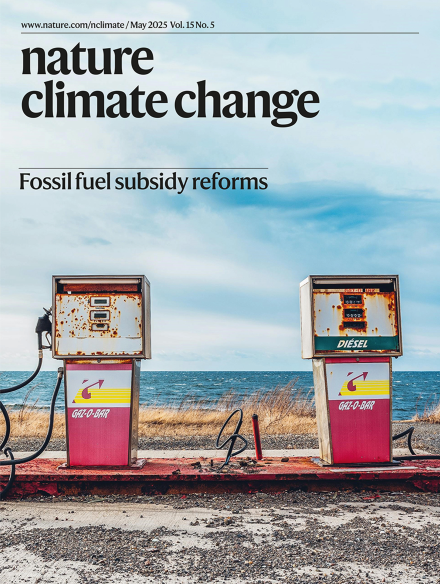
Fossil fuel subsidy reforms
have become more fragile
More reforms. Less staying power.
Using monthly data from 21 major gasoline-subsidizing countries, we find that reforms introduced since 2016 became more frequent and ambitious, but less durable. Only 30% lasted at least one year; 9% lasted at least three.
My contributionData analysis and interpretation of the results.
Read more
Among reforms introduced from 2016 to 2023, 30% lasted at least 12 months and 9% lasted at least 36 months. The study distinguishes the adoption of reforms from their persistence over time.
Mahdavi, P., Ross, M. L., & Simoni, E. (2025). Fossil fuel subsidy reforms have become more fragile. Nature Climate Change, 15(5), 569–574. DOI: 10.1038/s41558-025-02283-4.
An earlier version circulated in 2024 as Fossil Fuel Subsidy Reforms Have Grown More Fragile Since the Paris Conference.
Read the earlier preprint (opens in a new tab)Nature Climate Change 15(5), 569–574